
HTA training
Hybrid Threat Awareness is a compact, insurer-aligned training for internationally exposed staff, executives, and teams. Built on six operational principles and it turns hybrid risk into practical routines, clear reporting, and calm decisions.

Hybrid Threat Awareness Training
Hybrid Threat Awareness is Ombrex Consulting's training programme for people who are exposed by the work they do: travellers, project teams, operational roles with external exposure, assistants, and the support functions around senior individuals.
The programme exists because threats are no longer linear. Cyber, technology, travel, and movement now sit in one risk landscape, and harm arrives in more than one form: a physical approach, intimidation or fraud, social engineering, insider pressure, or a disinformation effort that shapes behaviour long before anything is visible on the ground. The actors range from opportunistic and organised criminals to state and non-state groups, each with different intent and capability. Training built for one of these lanes leaves people exposed on the others.
HTA draws on tradecraft from close protection, protective intelligence, and operational planning, translated into simple, repeatable habits that reduce exposure and improve decisions under pressure. It is aligned to duty of care and corporate policy, and it is taught without the theatrical or militarised framing that tends to make this kind of training memorable for the wrong reasons and of little use in practice.
Read more:
 B.J.F. Rifesser
 B.J.F. Rifesser
The six principles
Aware ~ Recognise early signals. Understand context. Notice manipulation.
Avoid ~ Reduce exposure through routines, boundaries, and information discipline.
Assess ~ Make fast, calm decisions using clear triggers and thresholds.
Communicate ~ Use check-ins, structured reporting, escalation paths, and crisis communication discipline.
Escape ~ Disengage safely. Move to a safe point. Activate support.
Stabilize ~ Run first-hour actions. Document essentials. Hand over to the right support chain.
What participants leave with
Sessions combine short teaching blocks with practical examples and scenario drills, with the emphasis on prevention, de-escalation, and decision-making under pressure. Content is role-aware, mixed-group delivery is possible, and the programme is delivered in English and other languages.
Participants leave with working tools rather than notes: a one-page travel and security quick reference, a clear escalation and reporting flow, a ready-to-use incident report format, and, where useful, a short needs assessment identifying recommended follow-on training by group. The Introduction is designed to function on its own and as the entry point to the wider programme.
Format
HTA is modular and tiered, so it can match an organisation's exposure and the roles being trained rather than forcing one format on everyone.
HTA Introduction. A compact, practical awareness module covering the hybrid risk picture, situational awareness, travel and hotel fundamentals, cyber hygiene on the move, and a clear reporting protocol. Delivered as a focused session with scenario drills, it creates an immediate baseline and a shared language across a group.
HTA Advanced. A deeper programme for roles with sustained or higher exposure, extending the travel, movement, surveillance-awareness, and decision-making content with more demanding drills.
HTA Executive. A concise, high-level format for senior individuals and their immediate circle, focused on personal exposure, digital footprint, travel, and the protocols that matter most at that level.
HTA Sector editions. Versions tailored to the specific exposure of a sector or operating environment, built around the risks that particular organisations actually face.
Duration: 8 hours for the introductory session, with deeper modules as mentioned above.
Audience: Travellers, project teams, operational roles with external exposure, executive assistants, central support functions. Mixed-group delivery is possible. Content is role-aware.
Languages: English, German, Dutch and Italian. Other languages on request.
Method: Short teaching blocks, practical examples, and scenario drills. Focus on prevention, de-escalation, and decision-making under pressure. Aligned to duty of care and corporate policy. No theatre, no militarised framing.
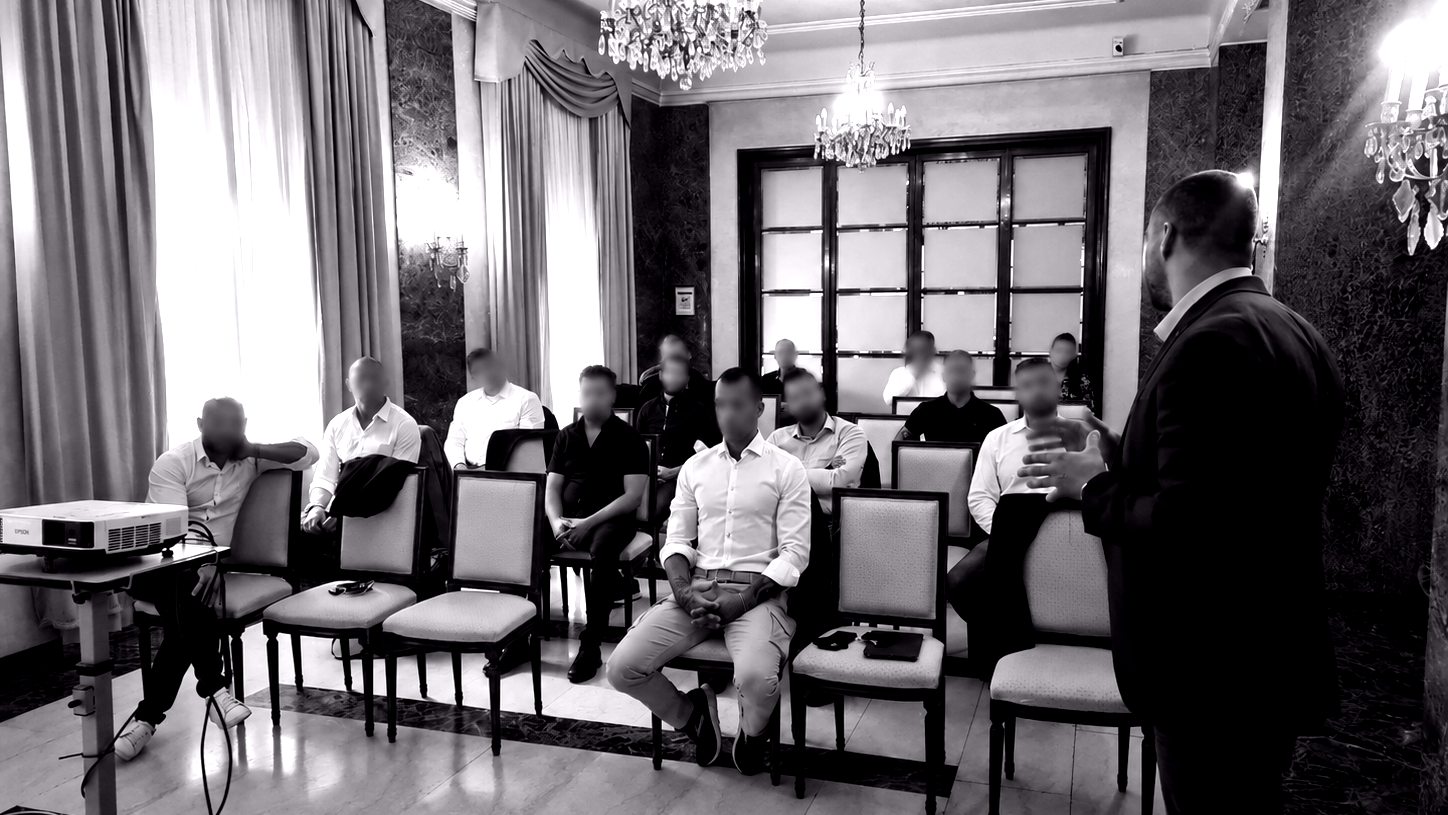
Recent delivery
HTA was delivered most recently for a European multinational, with international travel to the southern hemisphere, the executives, managers and PA's.
Contact
Most engagements begin with a direct conversation. A brief, confidential exchange is the appropriate first step, and anything sensitive is better discussed by voice than set out in writing. Use the form below to outline the nature of the matter and the best way to reach you. Every enquiry is handled in confidence, and we reply personally.
On references
References and operational background are shared in confidence, on request, with serious enquiries. Given the nature of the work, they are not published.